
Warning: Attempt to read property “display_name” on bool in /home/clients/032aeddccf88d635cd0b736a18516974/sites/gsr-net.org/wp-content/plugins/swisstomato-blocks/blocks/profile-blocks/profile-data-block/index.php on line 3
Login
Don’t have an account? Join us!
Join the Global Stress Resilience Network and be part of a global effort to better understand the sources of stress and promote resilience.
Winners
2025 Breakthrough Award Recipient
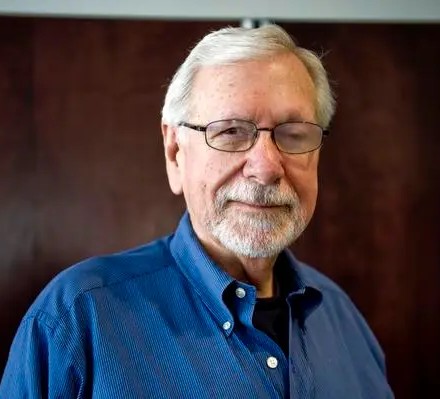
James L. McGaugh
USA
Distinguished Professor Emeritus at the University of California, Irvine
About the winner
About the winner
James McGaugh received his B.A. from San Jose State University in 1953 and his Ph.D. in psychology from the University of California, Berkeley, in 1959. He was briefly a professor at San Jose State and then did postdoctoral work in neuropharmacology with Nobel Laureate Professor Daniel Bovet at the Istituto Superiore di Sanitá in Rome, Italy. He then became a professor at the University of Oregon from 1961 to 1964. He was recruited to the University of California, Irvine, in 1964 (the year of the school’s founding) to be the founding chair of the Department of Psychobiology (now Neurobiology and Behavior). He became second dean (1967–1970) of the School of Biological Sciences following Edward Steinhaus, then Vice Chancellor (1975–1977) and executive Vice Chancellor (1978–1982) of the university. In 1982, he founded the Center for the Neurobiology of Learning and Memory and remained director from 1982 to 2004.
research/work
Description
James McGaugh’s research fundamentally transformed our understanding of how memories are formed. His early work showed that memories are not created instantly but remain labile and susceptible to influence after learning, gradually stabilizing through a process known as memory consolidation. He also pioneered the concept of post-training manipulations, demonstrating that treatments administered shortly after learning can enhance or impair later retention, providing a powerful way to study memory consolidation while avoiding performance-related confounds.
Over subsequent decades, James McGaugh and his collaborators further revealed how emotional arousal strengthens memory. His work showed that stress hormones such as epinephrine and cortisol modulate memory consolidation by engaging brain systems including the amygdala, which in turn influences other memory-related structures such as the hippocampus, nucleus accumbens, and caudate nucleus. Through this coordinated activity across brain regions, emotionally significant experiences are more likely to be remembered strongly and persistently.
Sign up for our newsletter
Stay updated with our latest news and upcoming events!